On 13 November 2025, Ireland’s electricity market changed in a way that had been anticipated - and delayed - for years. The launch of the Scheduling and Dispatch Programme (SDP) by Ireland’s two transmission system operators, EirGrid and SONI, meant that battery energy storage systems could, for the first time, participate directly in Ireland’s wholesale electricity market.
This is not a technical footnote. It represents a structural shift in the value case for battery storage in Ireland - from a technology that provided grid stability services in the background to an active participant in wholesale energy trading. For commercial operators already invested in BESS, and for businesses considering storage investment now, the implications are significant.
What Has Changed and Why It Matters
Before November 2025, grid-scale batteries in Ireland were largely limited to providing stability services - primarily frequency regulation through the DS3 system services programme managed by EirGrid. While DS3 revenues provided a bankable income stream, batteries were prevented from participating in the real-time wholesale electricity market (ISEM), which significantly limited their revenue potential.
The new Scheduling and Dispatch Programme allows BESS assets to both charge and discharge based on wholesale market signals - buying electricity when prices are low (typically at night or when renewable generation is high) and dispatching when prices are elevated (typically during morning and evening demand peaks). This arbitrage capability opens a new and substantial revenue source for battery operators.
Market milestone
Ireland enters the battery storage era
From November 2025, batteries can participate directly in Ireland’s wholesale electricity market. This reform aligns with the EU Clean Energy Package and supports Ireland’s target of 80% renewable electricity generation by 2030.
The Scale of Ireland’s BESS Sector
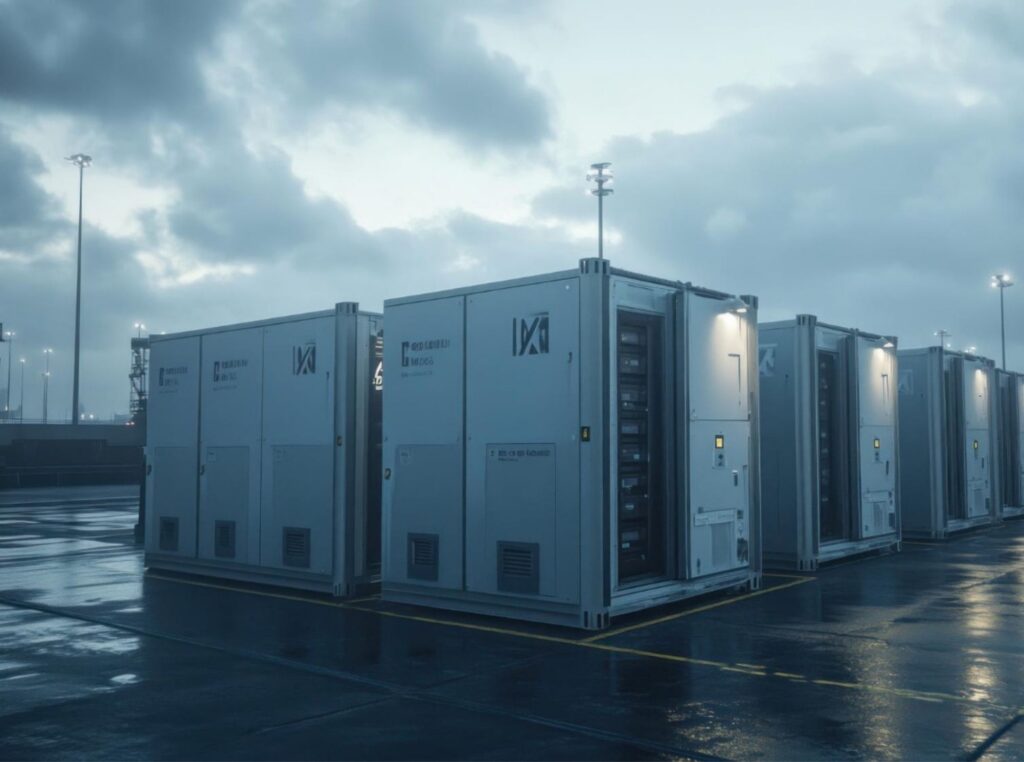
Ireland’s total installed battery energy storage capacity now stands at just under 1 GWh. ESB has emerged as the dominant player, operating approximately 300 MW of grid-scale battery capacity across five projects, with its 150 MW facility at Aghada being the largest single installation. Greencoat Renewables recently made its first storage investment with a 10.8 MW BESS co-located at the Killala Community Wind Farm in County Mayo - a signal of growing institutional confidence in storage as an asset class alongside wind and solar generation.
In Northern Ireland, planning activity reflects similar momentum: a 150 MW/300 MWh BESS was approved in County Antrim in early 2026, joining two previously approved projects in the same grid cluster. The pace of approvals indicates that the development pipeline is advancing rapidly as the revenue case strengthens.
The Commercial Case: Three Value Streams
For commercial and industrial businesses investing in battery storage - whether standalone or co-located with solar - the financial case in 2026 typically rests on three distinct value streams:
1. Peak Demand Shaving
Commercial electricity tariffs in Ireland include a demand charge component based on your peak consumption in any given period. A battery charged during off-peak hours and discharged during peak consumption periods can reduce the peak demand reading that determines this charge. For energy-intensive businesses, peak demand shaving alone can deliver annual savings of €5,000-€30,000 depending on consumption profile and contracted capacity.
2. Solar Self-Consumption Maximisation
When battery storage is combined with a commercial solar PV system, surplus daytime generation that would otherwise be exported at approximately 19.5 cent per kWh can instead be stored and consumed in the evening when grid import rates are 25-35 cent per kWh. The difference - typically 5-15 cent per kWh - compounds over tens of thousands of units annually to produce a materially better financial return than solar-only installations.
A 50 kWp solar system with 50 kWh of battery storage will typically achieve 25-35% higher annual returns than the same solar system without storage, depending on the business’s daily load profile.
3. Grid Services and Wholesale Arbitrage
For larger installations (typically 100 kW and above), participation in DS3 system services and - now - the wholesale electricity market through the SDP creates an income stream that operates largely independently of the business’s own consumption. These revenues are typically managed through energy management software that optimises charging and discharging based on live market signals.
| Value Stream | Applicable Scale | Est. Annual Value |
|---|---|---|
| Peak demand shaving | Any commercial scale | €5,000-€30,000 |
| Solar self-consumption | Co-located with solar | +25-35% on solar ROI |
| DS3 system services | 100 kW+ | Site-specific |
| Wholesale arbitrage (SDP) | 100 kW+ / utility scale | New from Nov 2025 |
BESS Applications: From Residential to Grid Scale
Battery energy storage technology is deployed across a wide range of scales in Ireland, each with different design requirements and financial drivers:
Residential batteries (5-20 kWh)
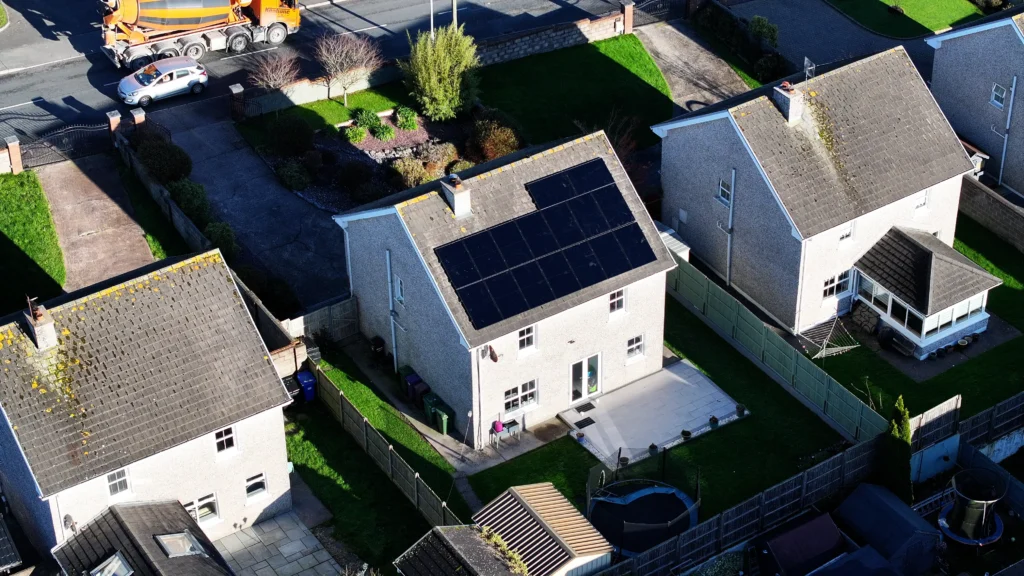
Home battery systems - typically lithium-ion units in the 5-15 kWh range - are designed to store surplus solar generation for evening use. At current energy prices, a well-matched home battery paired with a 4 kWp solar system can increase annual savings from approximately €1,000 to €1,600 or more. Residential batteries do not currently qualify for SEAI grant support, but their cost has fallen substantially in recent years and continues to decline.
Commercial and industrial (50 kWh - 5 MWh)
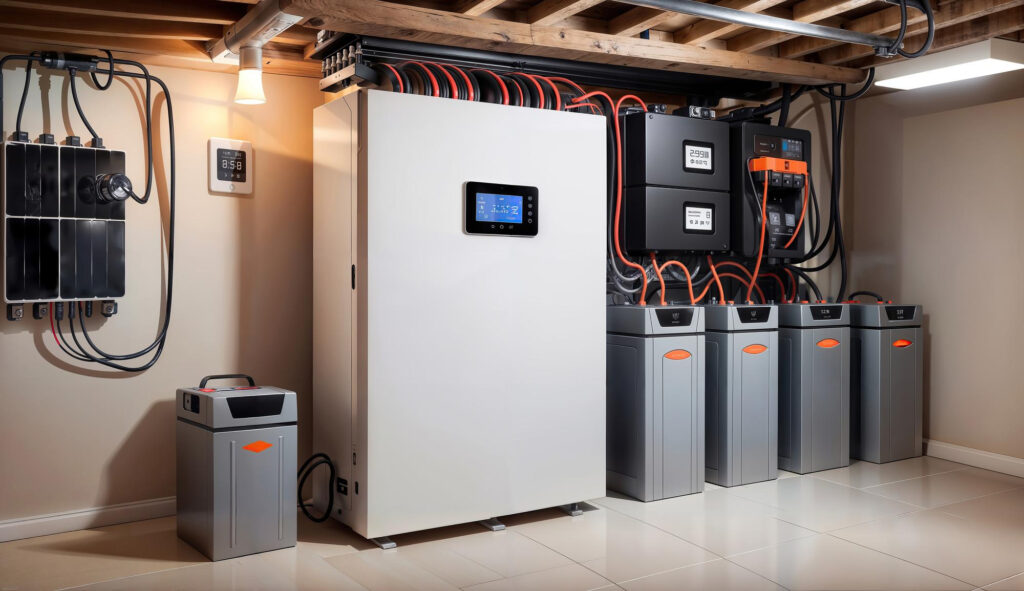
Commercial BESS installations are designed around the specific load profile of the business. System sizing is based on analysis of half-hourly consumption data to identify peak demand events, overnight charging opportunities, and the optimal interplay with any on-site solar generation. At this scale, battery investment is typically justified on peak demand shaving alone, with solar self-consumption and grid services as additional returns.
Grid-scale and utility (5 MWh+)
Large-scale BESS projects in Ireland are primarily designed to support grid stability, reduce curtailment of renewable generation, and - from November 2025 - participate in wholesale market trading. Ireland’s 80% renewable electricity target by 2030 requires substantial increases in grid-scale storage to manage the intermittency of wind and solar generation. EirGrid’s €2 billion grid infrastructure investment announced in July 2025 (part of a broader €3.5 billion programme) will create significant additional grid connection capacity for storage assets.
“Battery storage is not just a technical solution - it is an economic enabler, a grid stabiliser, and a climate imperative. Ireland needs significantly more storage capacity to reach its 2030 renewable energy targets.”
Challenges and Considerations
Despite the increasingly strong financial and policy environment for BESS in Ireland, there are practical challenges that commercial investors and developers should be aware of:
- Grid connection - Connecting a commercial or utility-scale BESS to the distribution or transmission network requires engagement with ESB Networks or EirGrid, and connection timelines can be extended in congested grid areas. Early engagement with the grid connection process is essential for larger projects.
- Safety and compliance - Battery installations in certain environments - industrial facilities, offshore assets, pharmaceutical plants - require careful attention to ATEX classification, fire safety design, and compliance with relevant electrical standards. These considerations add complexity and cost to projects in classified or regulated environments.
- Technology selection - The battery technology market is evolving rapidly. Lithium iron phosphate (LFP) chemistry has become the dominant commercial choice for stationary storage in Ireland given its safety profile, cycle life, and declining cost. However, system sizing, integration design, and warranty structures vary significantly between suppliers and require careful due diligence.
- Revenue uncertainty - While the SDP opens new wholesale market revenues, actual arbitrage returns will depend on electricity price volatility and dispatch optimisation. Businesses should model conservative revenue scenarios and ensure that the investment case is robust on self-consumption and demand-shaving benefits alone, with wholesale revenues treated as upside.
The Infrastructure Investment Context
In July 2025, the Irish government approved a €3.5 billion investment in electricity grid infrastructure - the largest in the history of Ireland’s electricity network. The investment allocates €1.5 billion to ESB Networks and €2 billion to EirGrid, with a focus on enabling the significant volumes of new renewable generation (wind, solar, and storage) required to meet Ireland’s 2030 targets.
This grid investment programme is directly relevant to BESS deployment. It will increase the available grid connection capacity for new storage projects, reduce the constraints that have delayed some projects in recent years, and create a more stable regulatory and infrastructure environment for long-term storage investment.
Key Takeaways for 2026 and Beyond
- From November 2025, battery storage systems can participate directly in Ireland’s wholesale electricity market - a major structural change to the BESS revenue landscape.
- Ireland’s total installed BESS capacity is approaching 1 GWh, with a substantial development pipeline in planning and construction.
- Commercial businesses can capture value from BESS through peak demand shaving, solar self-consumption optimisation, and grid services participation.
- The €3.5 billion grid infrastructure investment programme announced in July 2025 will improve grid connection access for new storage assets.
- Ireland’s 2030 target of 80% renewable electricity generation requires a significant scale-up of battery storage capacity to manage intermittency.
- For BESS projects in classified or safety-critical environments, specialist electrical and compliance expertise - including ATEX certification - is essential.
- Businesses investing in storage now are entering a market with strengthening revenue structures and improving grid infrastructure, ahead of what is expected to be a period of accelerated deployment.
For commercial and utility-scale storage we deliver, see battery storage and BESS, and for the connection side, grid infrastructure. Where storage is paired with solar, grant support runs through the SEAI Non-Domestic Microgen Grant. Projects in the south-east are covered on solar panels in County Tipperary.
Deciding between installers? See what Mitros customers say, rated 4.6 out of 5 from 70 verified Trustpilot reviews.