
Irish commercial electricity prices have increased by more than 40% since 2021. While wholesale prices have stabilised somewhat in 2025 and 2026, businesses are still paying between 25 and 35 cent per kWh depending on their tariff, usage profile, and standing charges. For energy-intensive operations - manufacturing facilities, agricultural businesses, warehouses, hotels - electricity is now one of the largest controllable cost lines on the P&L.
Commercial solar PV has moved from a sustainable differentiator to a financially essential investment. This guide sets out the current financial case in plain terms: costs, grants, tax incentives, and realistic return on investment for Irish businesses in 2026.
Why Commercial Solar Makes Financial Sense Now
The fundamental value proposition of commercial solar is straightforward. When you generate your own electricity, every unit consumed on-site displaces a unit you would otherwise purchase from your supplier at 25-35 cent per kWh. A well-sized rooftop or ground-mounted system generating 50,000 kWh per year - typical for a 50 kWp installation - produces between €12,500 and €17,500 in annual electricity cost savings at current commercial rates.
The electricity your solar system generates costs you nothing after installation. The effective price per kWh from solar, when total system cost is amortised over a 25-year panel lifespan, is typically below 5 cent. The arbitrage between generation cost and avoided grid price is the engine of commercial solar’s financial return.
Market context
Electricity prices are structurally elevated
Industry analysis consistently indicates that commercial electricity prices in Ireland are unlikely to return to pre-2021 levels. Solar provides a hedge against further increases by locking in a portion of your energy supply at a near-zero variable cost for 25+ years.
Typical Commercial Solar Costs in Ireland
Commercial solar panel system costs in Ireland vary significantly based on system size, mounting type (rooftop versus ground-mounted), roof access complexity, and the extent of grid connection work required. The following figures represent typical ranges for 2026 installations:
| System Size | Typical Cost (excl. VAT) | Annual Saving (est.) | Payback Period |
|---|---|---|---|
| 20 kWp | €22,000-€30,000 | €6,000-€8,000 | 4-5 years |
| 50 kWp | €55,000-€75,000 | €12,000-€18,000 | 4-6 years |
| 100 kWp | €100,000-€140,000 | €25,000-€40,000 | 4-6 years |
| 150 kWp+ | €150,000+ | €40,000-€70,000+ | 4-7 years |
The cost per kWp falls as system size increases, which is why larger installations typically achieve faster payback periods despite higher absolute costs. A 50 kWp system generally costs between €1,100 and €1,500 per kWp installed, inclusive of all equipment and electrical works.
The SEAI NDMG Grant: Up to €162,600 for Businesses
The Non-Domestic Microgeneration Support (NDMG) grant from SEAI is the primary grant mechanism for commercial solar installations in Ireland. Unlike the residential scheme, commercial eligibility is not restricted by property age, making it available to a wide range of Irish businesses, farms, schools, community groups, and public sector organisations.
| Organisation Type | Maximum SEAI Grant | Notes |
|---|---|---|
| Businesses (SME) | €162,600 | Based on system size and kWp installed |
| Farms (TAMS III) | €90,000 | 40% grant rate on eligible costs via Dept. Agriculture |
| Schools & community | €162,600 | Same NDMG structure as commercial |
For agricultural businesses, the TAMS III scheme through the Department of Agriculture offers an alternative or complementary funding route, providing a 40% grant rate on eligible solar installation costs up to €90,000. A farmer installing a 30 kW system costing €35,000 could receive a TAMS III grant of €14,000, reducing the net cost to €21,000 before tax incentives are applied.
Accelerated Capital Allowance: The Tax Advantage
One of the most significant financial advantages for Irish businesses investing in solar is the Accelerated Capital Allowance (ACA). Under this scheme, businesses can write off 100% of the cost of qualifying energy-efficient equipment - including solar PV systems - against corporation tax in the year of purchase, rather than over the standard eight-year depreciation period.
For a company paying corporation tax at 12.5%, a €75,000 solar installation generates a €9,375 tax saving in year one. Combined with the NDMG grant and electricity bill savings, this substantially reduces the effective net investment and accelerates the payback period.
“When you account for the NDMG grant, Accelerated Capital Allowance, VAT recovery, and export income from the Clean Export Guarantee, the effective net cost of a commercial solar system is significantly lower than the headline installation price.”
The Clean Export Guarantee for Businesses
Under the government’s Microgeneration Support Scheme (MSS), commercial solar installations of up to 50 kWp can receive payment for surplus electricity exported to the grid through the Clean Export Guarantee. The current export rate is approximately 19.5 cent per kWh, paid by your electricity supplier for verified exports.
For larger systems over 50 kWp, the Small-Scale Renewable Electricity Support Scheme (SSRESS) provides an equivalent export tariff structure designed for larger commercial generators. In both cases, export income adds to the overall financial return, although the primary value driver for most commercial installations remains the on-site self-consumption of solar-generated electricity at avoided grid rates.
A Realistic ROI Example: Irish Manufacturing Business
To illustrate a real-world commercial solar return, consider a manufacturing company in the Irish midlands with annual electricity consumption of 120,000 kWh, currently paying 28 cent per kWh blended commercial rate.
| Item | Value |
|---|---|
| System size | 80 kWp rooftop |
| Annual generation | ~68,000 kWh |
| Self-consumption (70%) | ~47,600 kWh |
| Annual bill saving (@ €0.28) | €13,328 |
| Export income (~30%) | €3,978 |
| Total annual return | €17,306 |
| Gross installation cost | €95,000 |
| Less NDMG grant | −€28,000 (est.) |
| Less ACA tax saving | −€8,375 |
| Effective net cost | ~€58,625 |
| Payback period | ~3.4 years |
| 25-year net saving | €375,000+ |
These are illustrative figures based on typical Irish commercial installation parameters in 2026, and actual returns will vary based on site-specific conditions, energy consumption profiles, and grid connection requirements. However, they are representative of the order of magnitude that well-designed commercial solar systems deliver in the current market.
Agricultural Solar: A Specific Opportunity
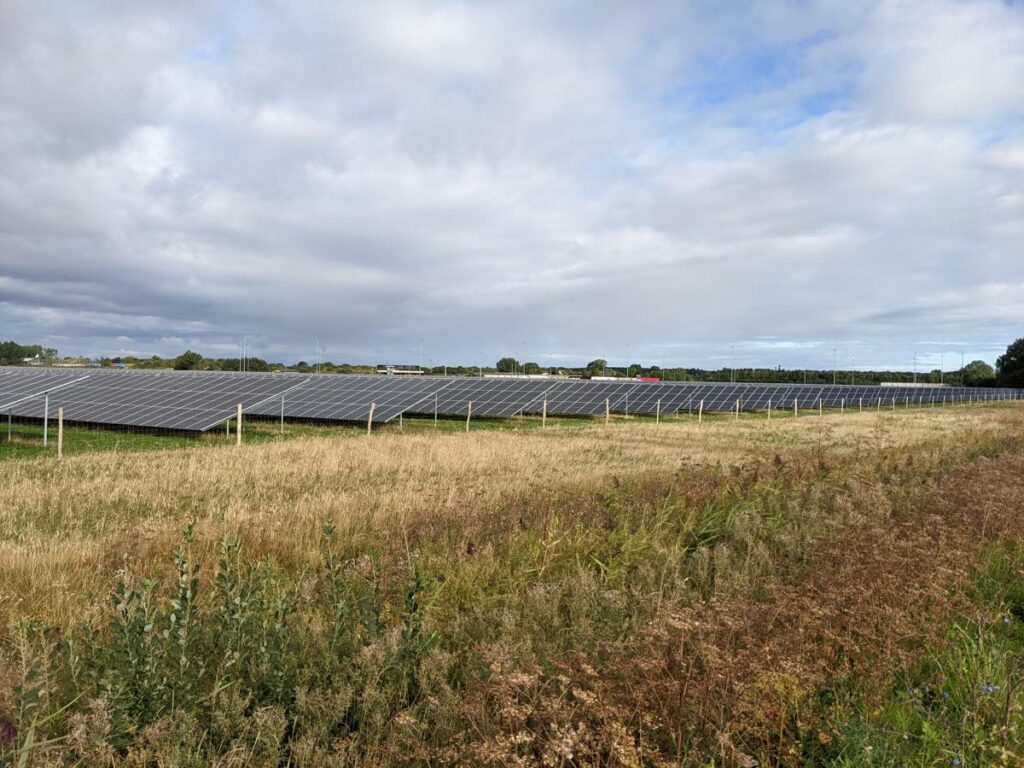
Irish farms are substantial energy consumers - milking equipment, refrigeration, grain drying, and lighting can result in significant annual electricity bills. Commercial and ground-mounted solar systems are increasingly common across Irish agricultural holdings, and the combination of SEAI NDMG and TAMS III funding makes the financial case particularly compelling for farm businesses.
Ground-mounted systems are well suited to farms with available land, and can be sized to match the farm’s full annual consumption without the roof constraints that affect commercial buildings. Agricultural solar systems typically achieve payback periods of four to six years, with lifetime savings often exceeding €200,000 for mid-sized installations.
Planning Permission and Grid Connection
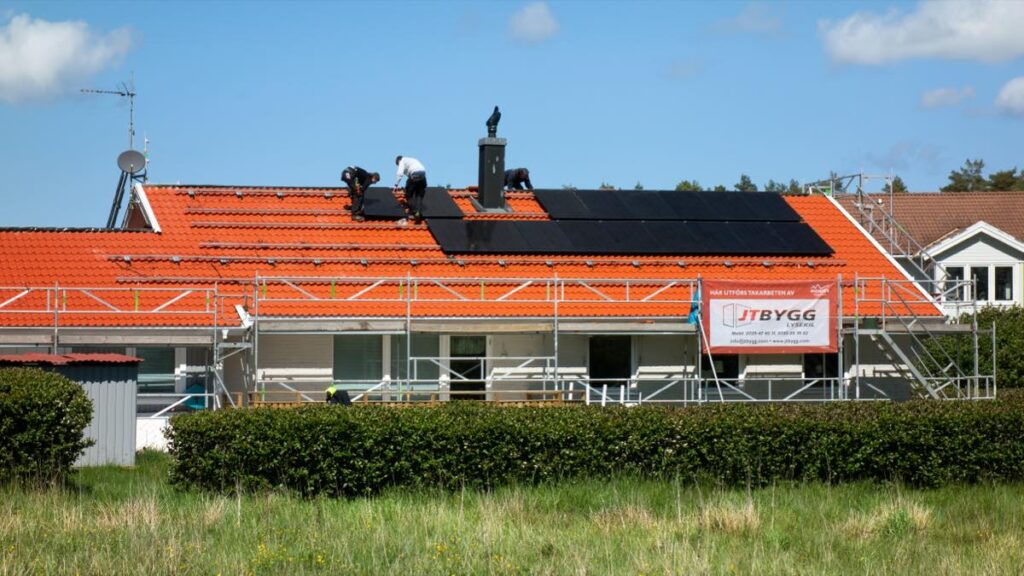
For most commercial rooftop solar installations, planning permission is not required under current Irish planning exemptions. Flat roofs - common in warehouses, factories, and retail buildings - are actually well suited for commercial solar, as panels can be mounted on ballasted frames at an optimal angle without penetrating the roof membrane.
Grid connection for systems above a certain size requires an application to ESB Networks and coordination with your distribution network operator. This process typically takes four to eight weeks and is best managed by an experienced contractor with prior grid connection experience. For larger installations above 50 kWp, early engagement with the grid connection process is advisable as it can influence the overall project timeline.
Summary: The Commercial Solar Case in 2026
- Commercial electricity costs in Ireland remain 40% above 2021 levels at 25-35 cent per kWh.
- A 50 kWp commercial system generates approximately €12,000-€18,000 per year in bill savings.
- The SEAI NDMG grant provides up to €162,600 for businesses, farms, schools and community organisations.
- The TAMS III scheme offers 40% grant support up to €90,000 specifically for agricultural businesses.
- The Accelerated Capital Allowance allows 100% tax write-off against corporation tax in year one.
- Commercial payback periods typically range from four to seven years, with 25-year net savings often exceeding €200,000 for mid-sized systems.
- The Clean Export Guarantee pays approximately 19.5 cent per kWh for electricity exported to the grid.
The grant mechanism itself is covered in detail in our guide to the SEAI Non-Domestic Microgen Grant, and per-kWp cost benchmarks are in commercial solar installation cost in Ireland. Connection capacity is assessed by our grid infrastructure team. For sites in the south-east, see solar panels in County Tipperary.
Deciding between installers? See what Mitros customers say, rated 4.6 out of 5 from 70 verified Trustpilot reviews.