If you’ve been thinking about installing solar panels on your home in Ireland, 2026 is a significant year to act. The government’s SEAI solar grant - one of the most accessible renewable energy incentives available to Irish homeowners - was held at its full rate for 2026, but the scheme is still on a downward path toward a planned phase-out by 2029.
This guide covers everything you need to know: the current grant structure, eligibility rules, the application process, and how to maximise your return before the next reduction takes effect.
What Is the SEAI Solar Grant?
The SEAI (Sustainable Energy Authority of Ireland) solar electricity grant is a government-backed scheme that provides financial support to homeowners installing residential solar PV systems. The grant is designed to reduce the upfront cost of installation, making renewable energy accessible to a broader range of households.
The grant does not need to be repaid. It is paid directly to your installer once the work is completed and verified, which means most approved installers will deduct the grant from your quoted price upfront - so you never have to handle the grant application payment yourself.
Key fact
The grant was held at €1,800 for 2026
The grant had been expected to drop by €300 on 1 January 2026. In November 2025 the Minister for Climate confirmed it would instead remain at €1,800 - the first year since the scheme began that the rate has not been cut. The scheme is still scheduled to phase out by 2029, so the long-term direction of travel remains downward.
Current Grant Rates for 2026
The grant is calculated based on the peak generation capacity of your solar panel system, measured in kilowatt-peak (kWp). The structure for 2026 is as follows:
| System Size | Rate | Total Grant |
|---|---|---|
| First 2 kWp | €700 per kWp | €1,400 |
| Additional kWp (up to 4 kWp total) | €200 per kWp | +€400 |
| Maximum (4 kWp system) | - | €1,800 |
The maximum grant for 2026 is €1,800, unchanged from 2025. The grant is paid pro rata, so a 2.5 kWp system attracts €1,500. The government has signalled reductions in subsequent years as panel costs continue to fall, ahead of the scheme’s planned phase-out in 2029.
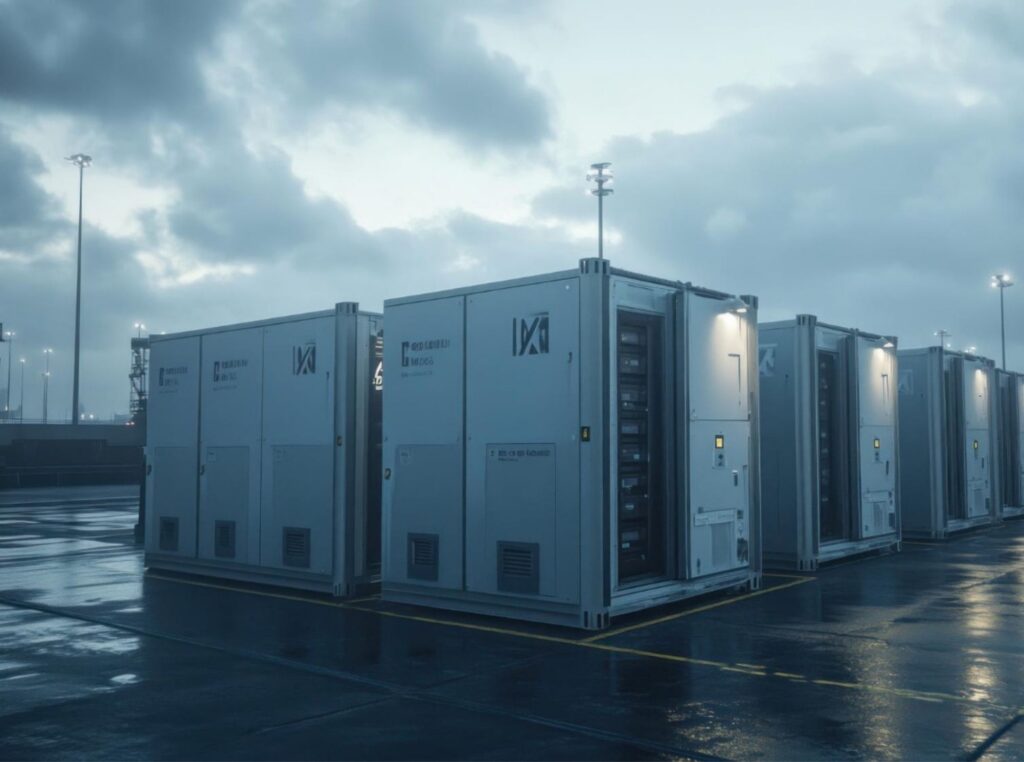
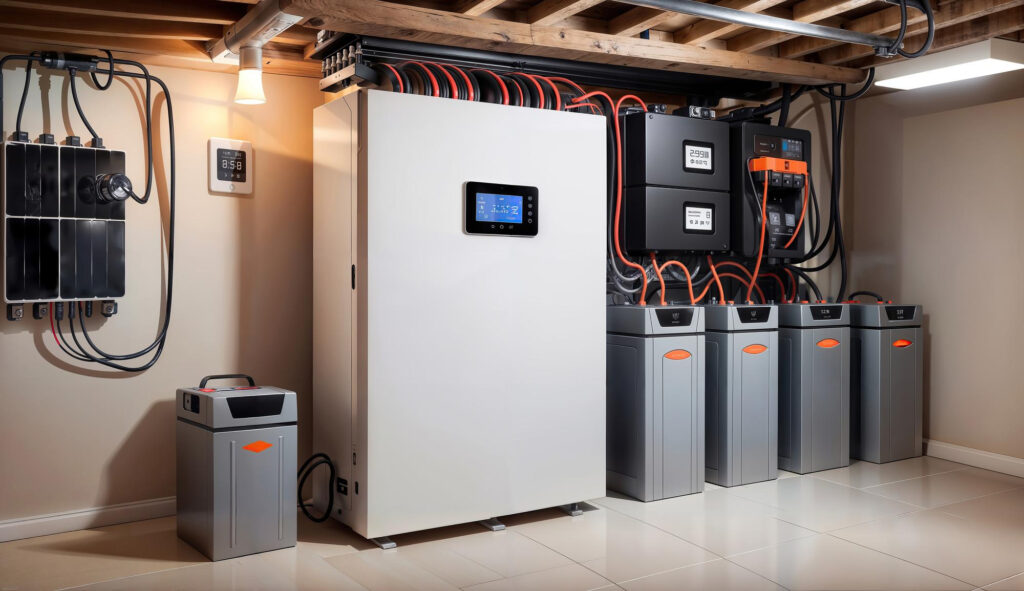
It is worth noting that battery storage systems, while highly recommended for maximising self-consumption and reducing energy imports, do not currently qualify for any additional SEAI grant funding. The grant applies to solar PV panels, inverters, and associated electrical works only.
Is Your Home Eligible?
Eligibility is straightforward for most Irish households, but there are a few important conditions to be aware of:
- Your home must have been built and occupied before 31 December 2020. Homes constructed after this date are not eligible for the residential solar grant.
- You must be the homeowner and the property must be your principal private residence.
- You must use an installer registered on SEAI’s Renewable Installers Register. Only an SEAI-approved installer can certify the installation and submit the grant claim on your behalf.
- You must apply for and receive a grant offer from SEAI before any work begins. Starting work before the grant offer is issued will disqualify you from the scheme.
- Once a grant offer is issued, you have eight months to complete the installation.
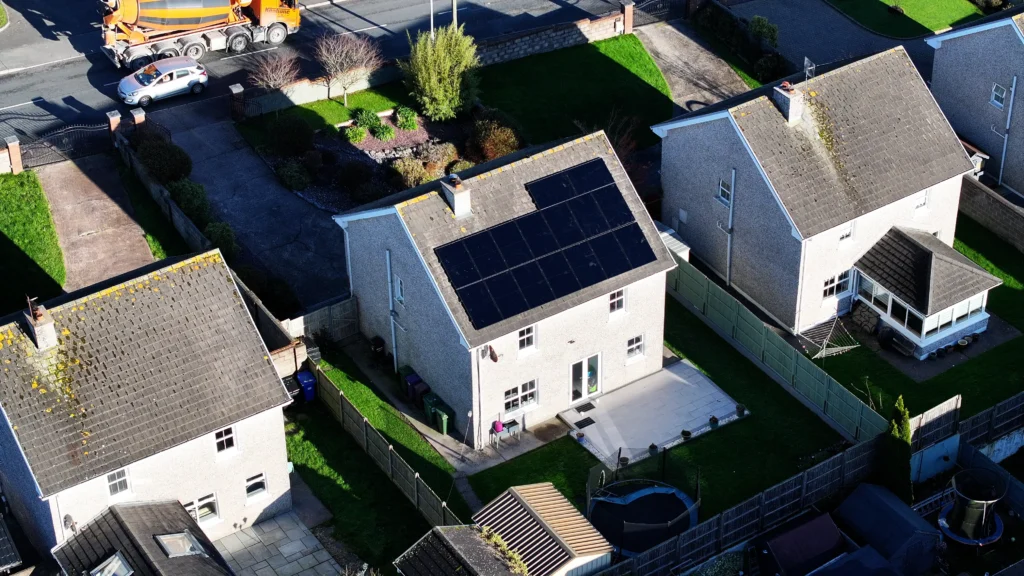
“Most Irish homes with a south, south-east or south-west facing roof are suitable for solar. A thorough site assessment will determine the optimal layout and expected generation for your specific property.”
What Does a Typical Residential Solar System Cost?
Before the SEAI grant, a typical residential solar PV system in Ireland ranges from approximately €6,000 to €12,000 depending on system size, panel quality, roof complexity, and the scope of additional electrical work required.
| System Size | Typical Cost (before grant) | After €1,800 Grant | Est. Annual Saving |
|---|---|---|---|
| 3 kWp | €6,500-€8,000 | €4,700-€6,200 | €800-€1,000 |
| 4 kWp | €7,500-€10,000 | €5,700-€8,200 | €1,000-€1,400 |
| 4 kWp + Battery | €11,000-€16,000 | €9,200-€14,200 | €1,400-€2,000+ |
Most Irish homeowners save between €800 and €1,200 per year on energy bills with a well-sized solar system, rising to €1,400-€2,000 or more when battery storage is added. At these savings levels, the typical payback period for a net investment after the grant ranges from five to nine years - you can estimate your own savings and payback here - after which the electricity generated is effectively free for the remaining life of the panels.
The Clean Export Guarantee: Getting Paid for Surplus Generation
One of the lesser-known benefits of going solar in Ireland is the Clean Export Guarantee (CEG). Under this scheme, your electricity supplier pays you for every unit of surplus solar electricity you export to the national grid. The export rate varies by supplier but is typically around 19-21 cent per kWh.
The CEG adds a secondary income stream to your solar investment. While the highest financial value always comes from consuming your own generated electricity rather than exporting it, the CEG ensures that nothing goes to waste on high-generation days or when you are away from home.
The Application Process: Step by Step
- Get a site assessment - An SEAI-registered installer visits your home to assess roof orientation, shading, structural suitability, and your household energy consumption. This forms the basis of the system design and quote.
- Apply for the grant offer - Your installer, or you, submits the SEAI grant application online. You must not start any work before receiving the formal grant offer.
- Receive your grant offer - SEAI issues a grant offer within a few weeks. This offer is valid for eight months, within which the installation must be completed.
- Installation and commissioning - Your SEAI-registered installer completes the work. Most residential installations take one to two days.
- Grant payment - Your installer submits the completion documentation to SEAI. The grant is paid to the installer, who will have deducted it from your invoice upfront.
Will Solar Panels Work in Ireland’s Climate?
It is one of the most common questions, and the answer is a firm yes. Modern solar PV panels are designed to generate electricity from daylight - not direct sunlight - and function effectively even on overcast days. Ireland receives between 1,100 and 1,400 hours of sunshine annually, which is sufficient for solar panels to generate meaningful energy throughout the year.
In practical terms, a 4 kWp system in Ireland will generate approximately 3,200-3,600 kWh of electricity per year - enough to cover a significant portion of a typical household’s annual consumption of 4,200-4,800 kWh.
Planning permission
Solar panels are generally exempt from planning permission
Under current Irish planning guidelines, rooftop solar panel installations on residential properties are classified as exempted development in most cases. Your installer will advise you during the site assessment if any specific planning considerations apply to your property or location.
Battery Storage: Should You Add It Now?
A solar PV system without battery storage generates electricity only when the sun is shining. For households with high daytime occupancy - families at home during the day, remote workers, or properties with EV chargers - self-consumption is naturally high and battery storage may be less critical.
For households that are largely empty during the day, a battery storage system is a highly effective way to store daytime solar generation for use in the evenings when energy demand is highest. Batteries typically add €3,000-€5,000 to the overall system cost, but they can increase the annual financial return by 30-50% compared to a solar-only installation.
While battery storage is not currently covered by the SEAI residential grant, it remains a sound investment for most households when the total cost and long-term savings are considered together.
Summary: Key Points for 2026
- The maximum SEAI residential solar grant in 2026 is €1,800 for a 4 kWp system.
- The grant was held at €1,800 for 2026, but the scheme remains scheduled to phase out by 2029.
- Homes must have been built and occupied before 31 December 2020 to be eligible.
- You must apply before work begins. Starting without a grant offer disqualifies your application.
- The Clean Export Guarantee pays you for surplus electricity exported to the grid.
- Most residential systems have a payback period of five to nine years after the grant.
- Battery storage is not covered by the SEAI grant but significantly improves annual returns.
If you are considering solar for your home and want to understand whether your property is suitable and what return you could expect, the best starting point is a free site assessment from an SEAI-registered installer. The numbers in 2026 make a compelling case - and with the grant held at €1,800 this year, the support on offer is unchanged from 2025.
Grant eligibility depends on using a company on the SEAI register, which you can verify yourself as set out in is Mitros an SEAI registered solar installer. If your property is in the south-east, see solar panels in County Tipperary and solar panels in Cashel for how we cover the area, and our residential solar page for what we install.
Deciding between installers? See what Mitros customers say, rated 4.6 out of 5 from 70 verified Trustpilot reviews.